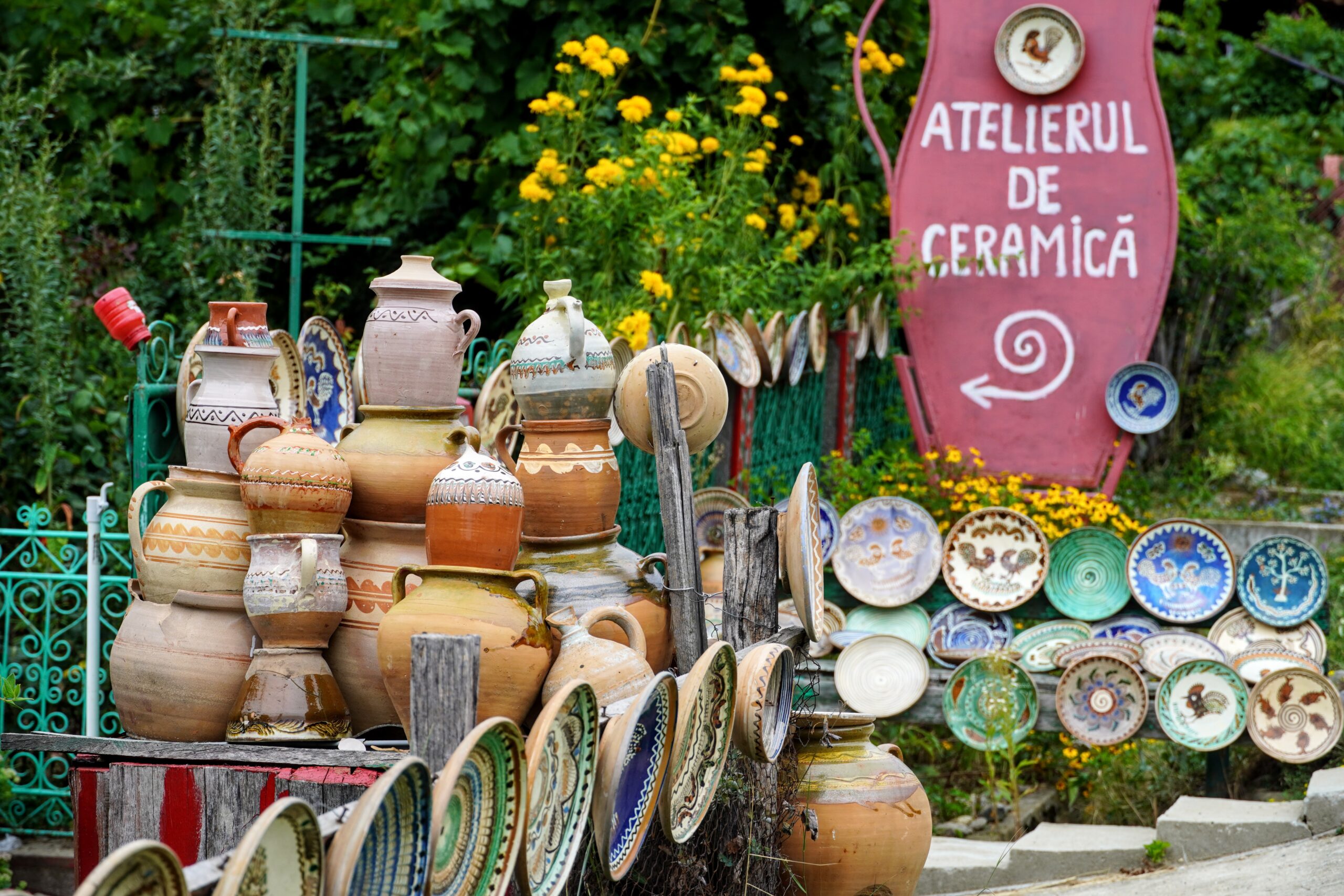
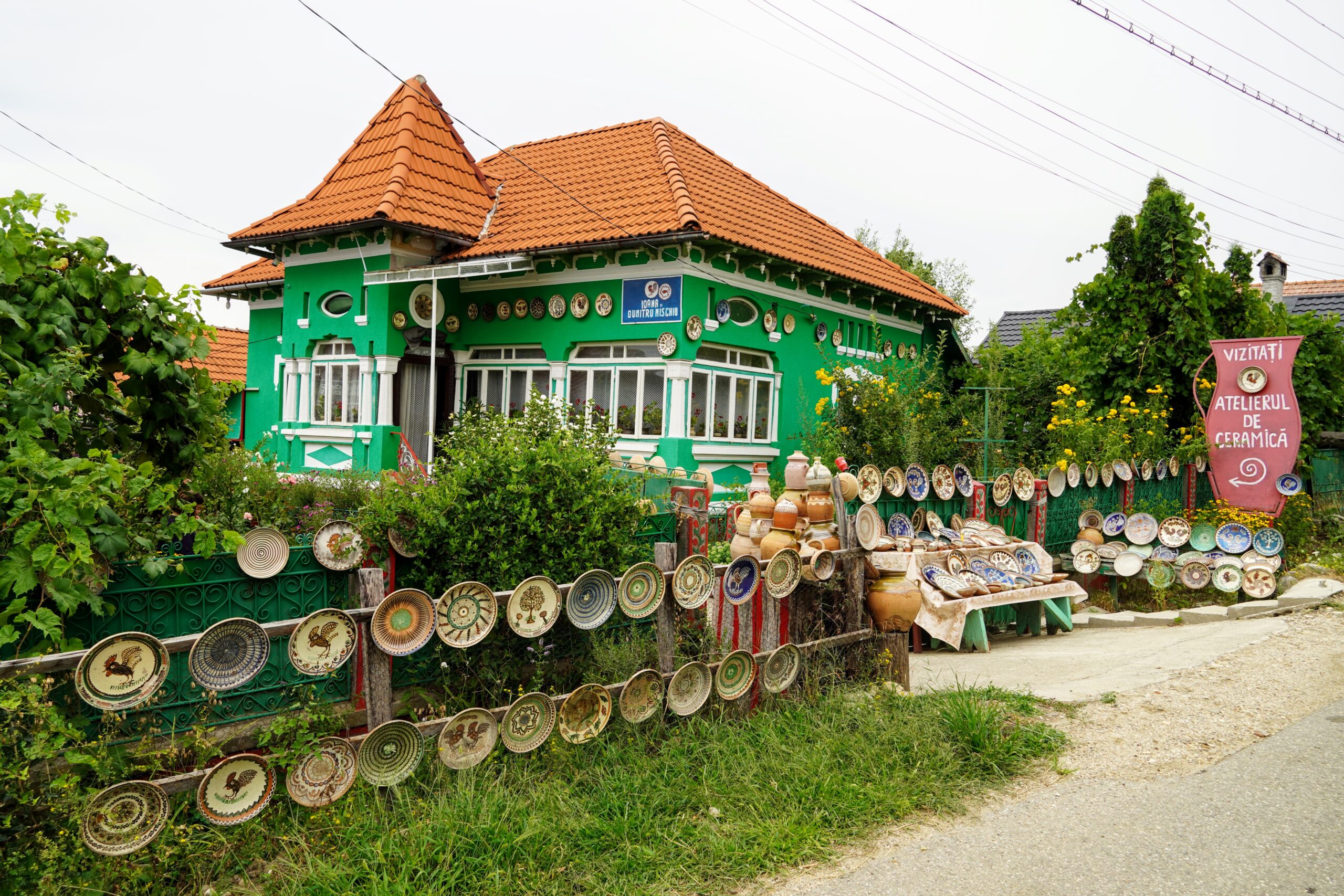
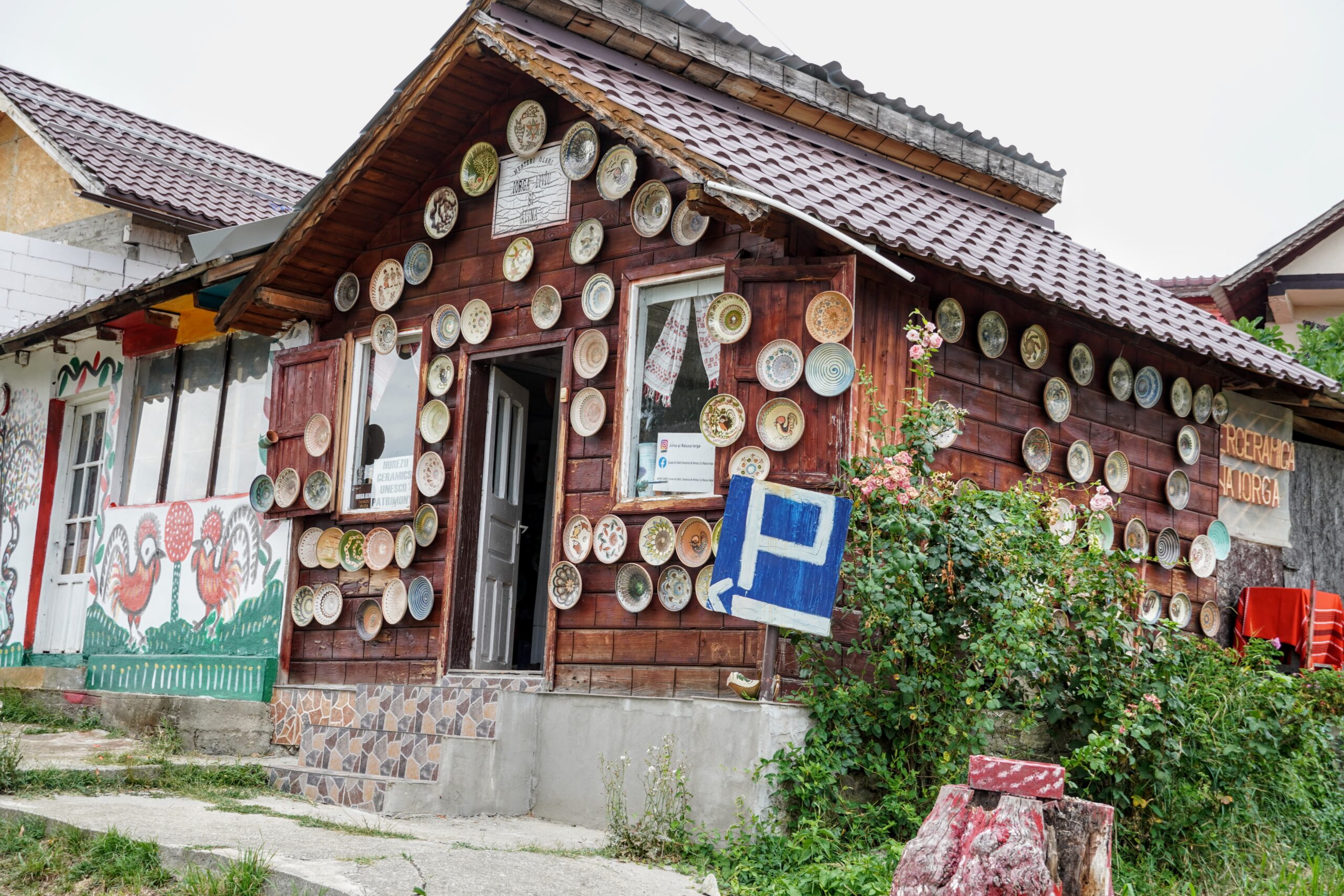
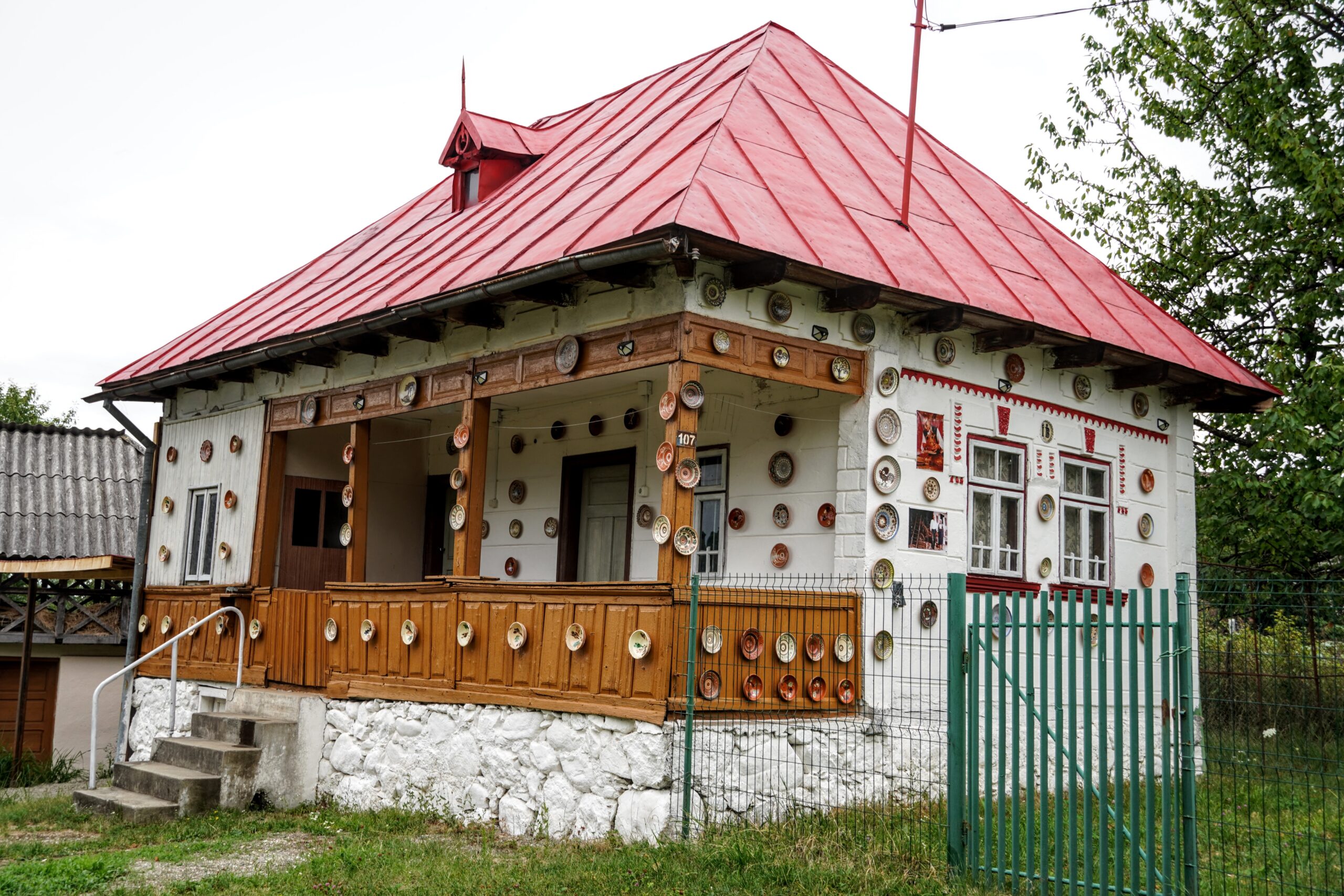
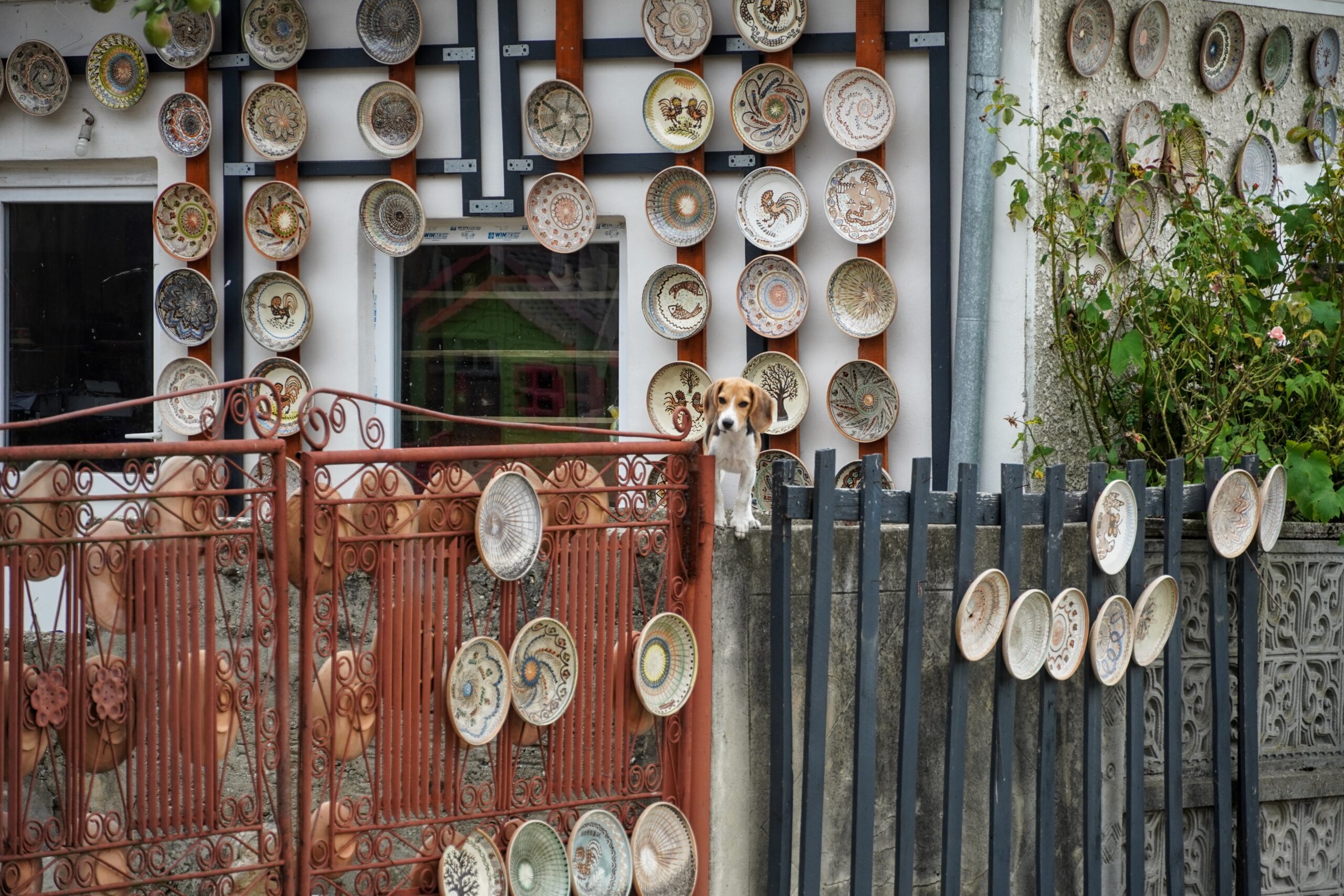
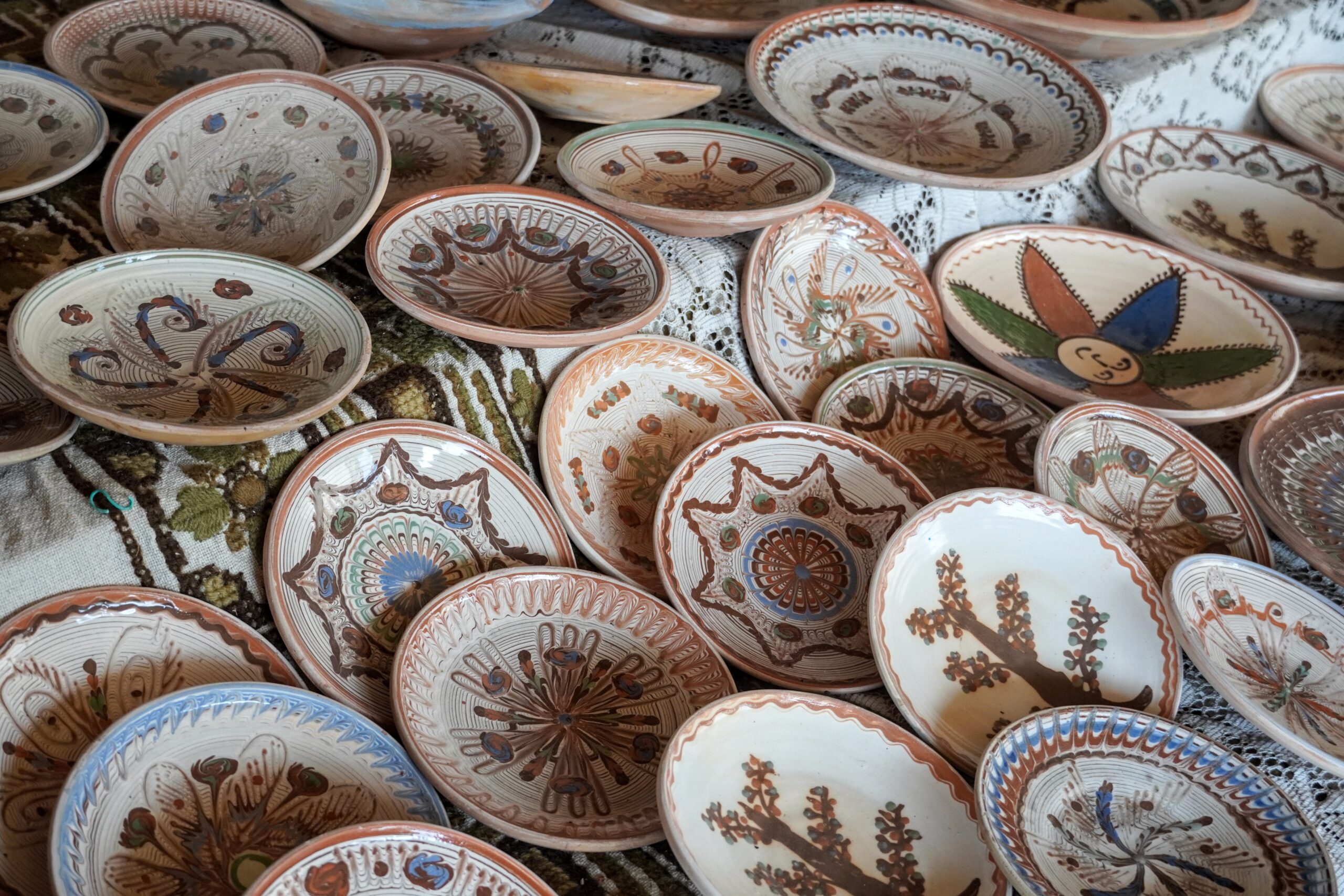
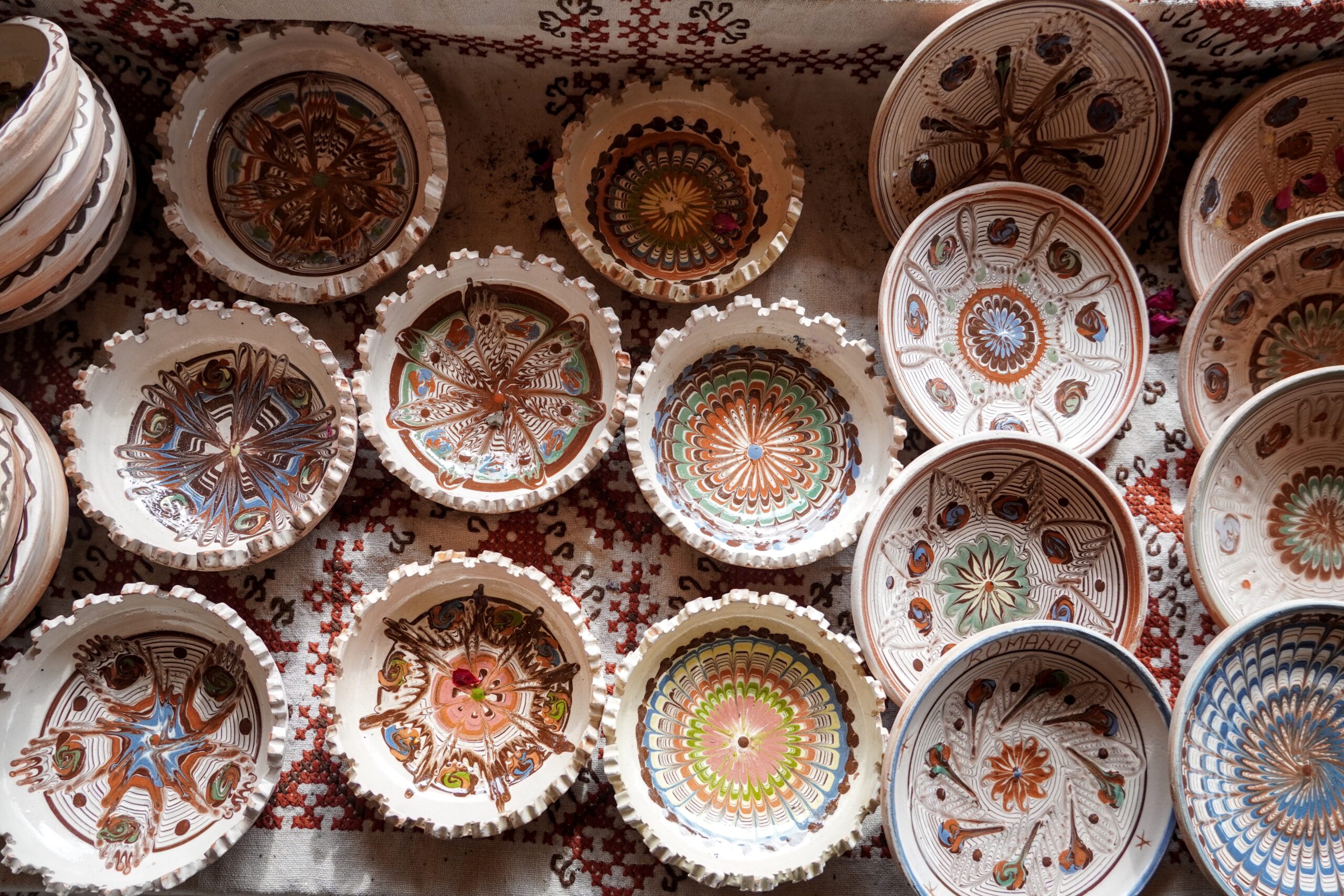
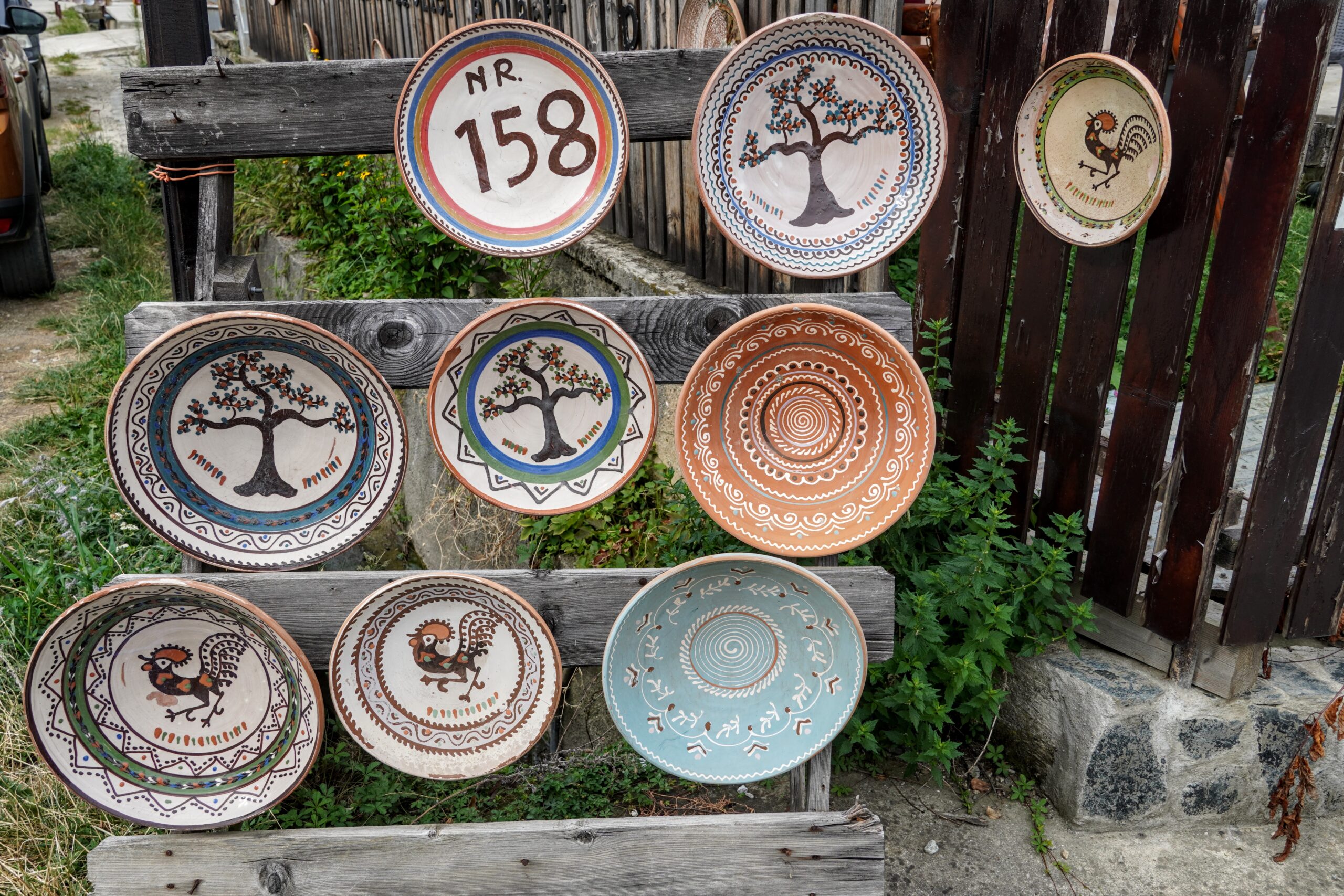
The pottery tradition from Horezu, recognized internationally and included in UNESCO's Intangible Cultural Heritage in 2012, is a true emblem of Romanian folk art. It began to flourish during the reign of Constantin Brâncoveanu when the ruler, seeking to avoid purchasing tableware from abroad, brought in Greek potters to refine the skills of local craftsmen who passed down this craft from father to son until today.
The raw material used in traditional pottery is clay extracted from the local area, specifically from a site called “Dealul Ulmului” (The Elm’s Hill). Typically, the clay is collected in the autumn for the coming year and stored in the craftsmen's yards, where it is left for crumbling under the effects of rain and snow. The paints used are also natural, made from various combinations that include copper oxide, kaolin, or cobalt.
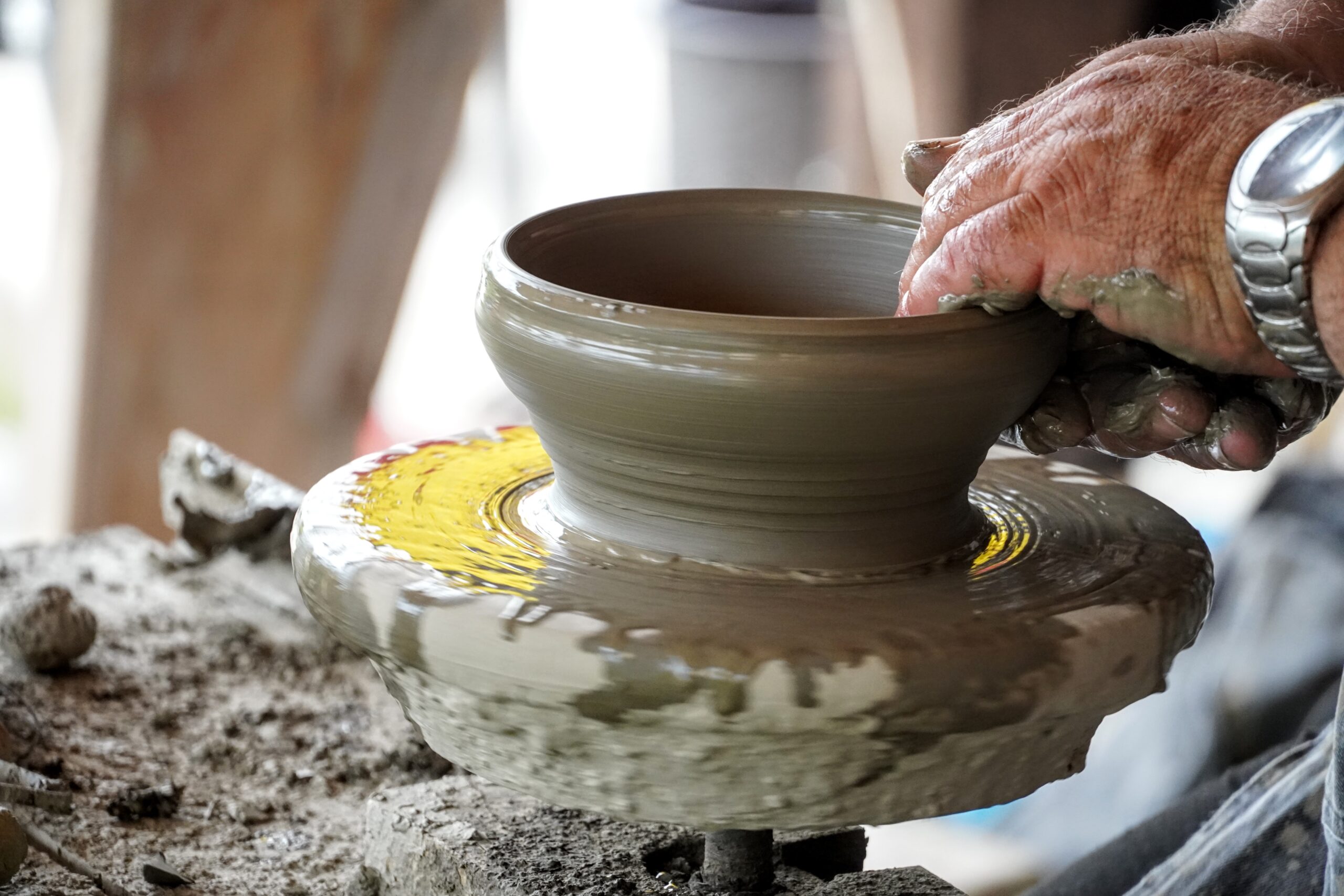
The process begins with the manual shaping of the clay to form the vessel, using the potter's wheel, an authentic tool operated by foot. Next comes the decorating and scraping, after which the vessels are left to dry. Finally, they undergo two firings, which traditionally took place in brick kilns with wood fire. In between the firings, the glazing process occurs.
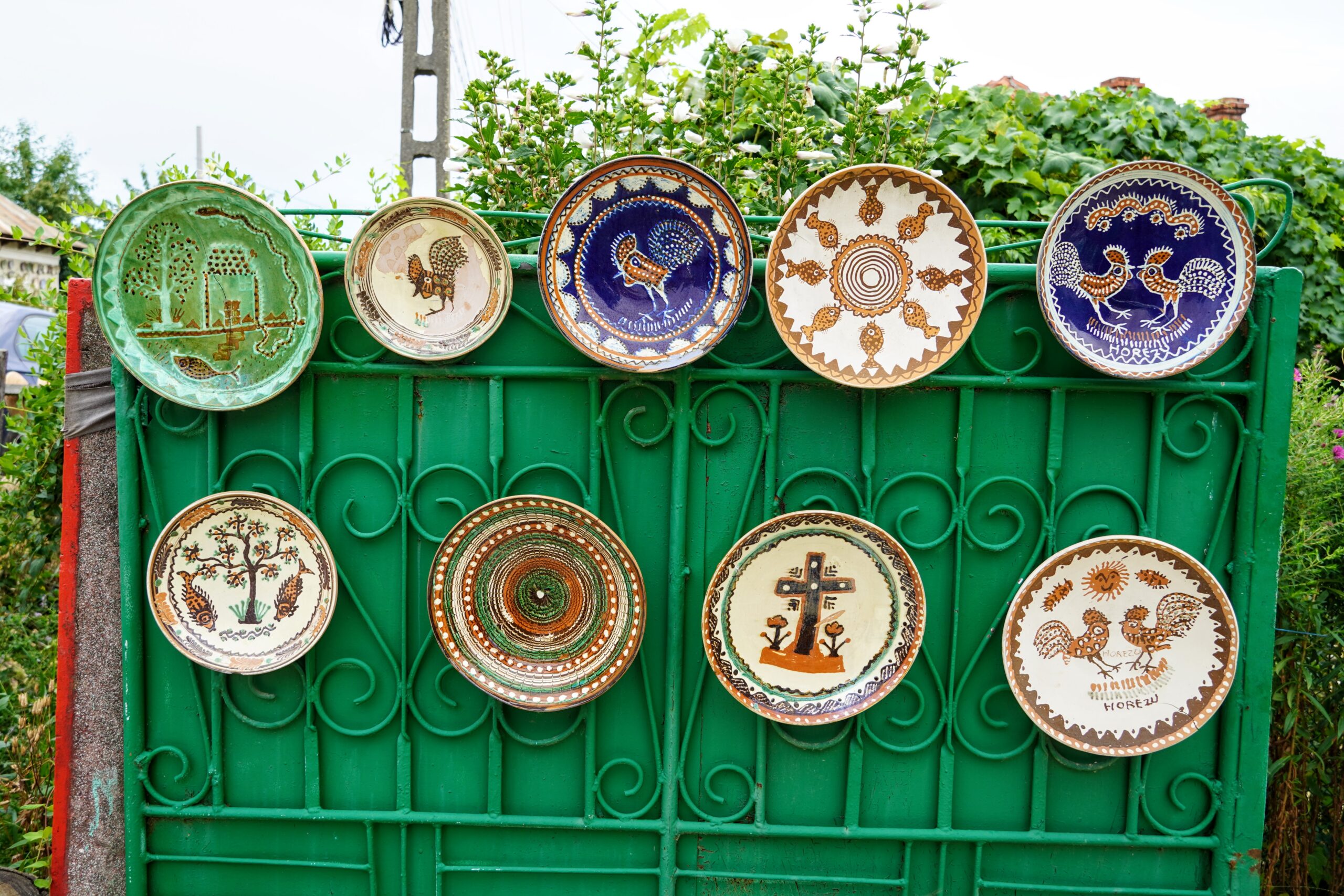
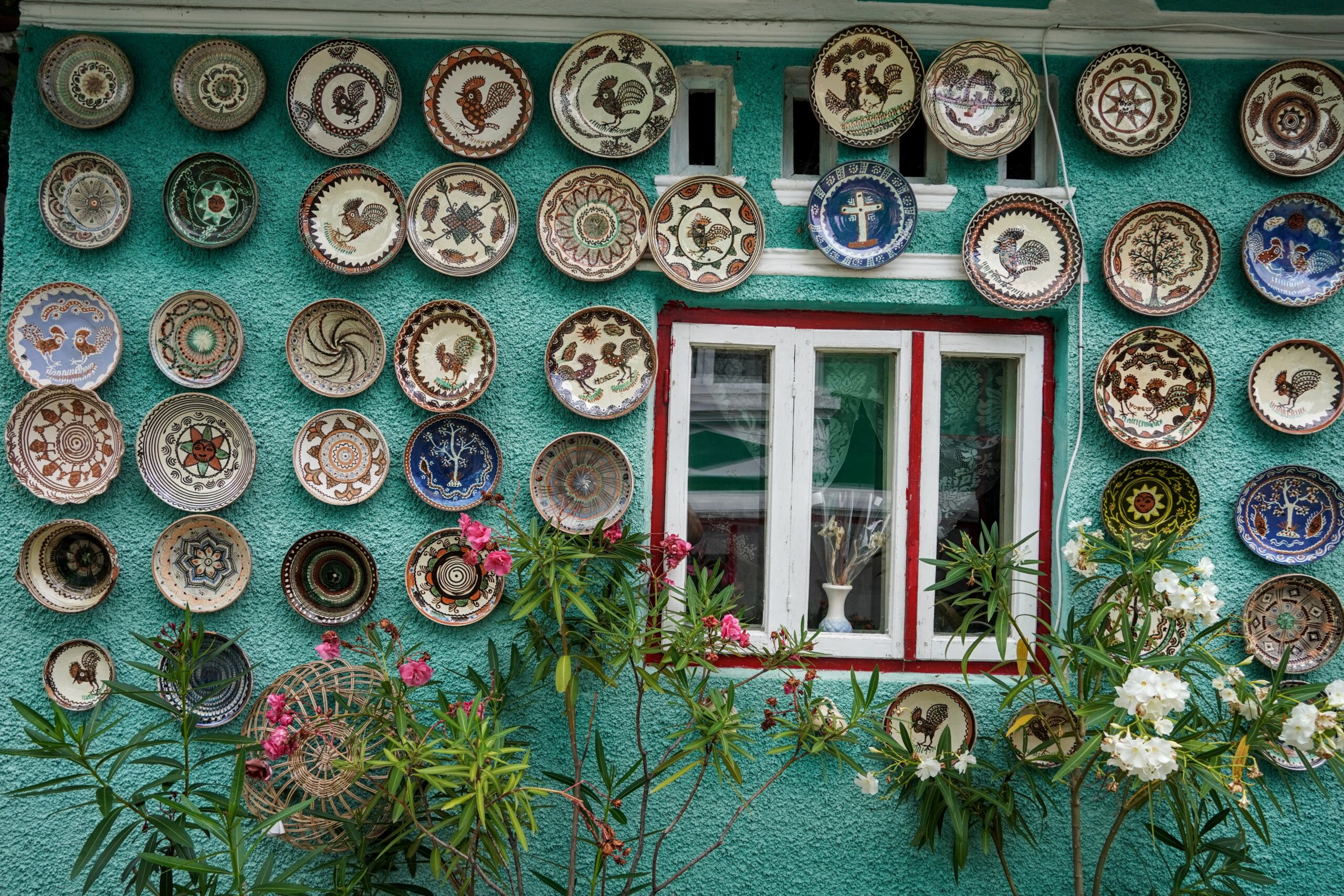
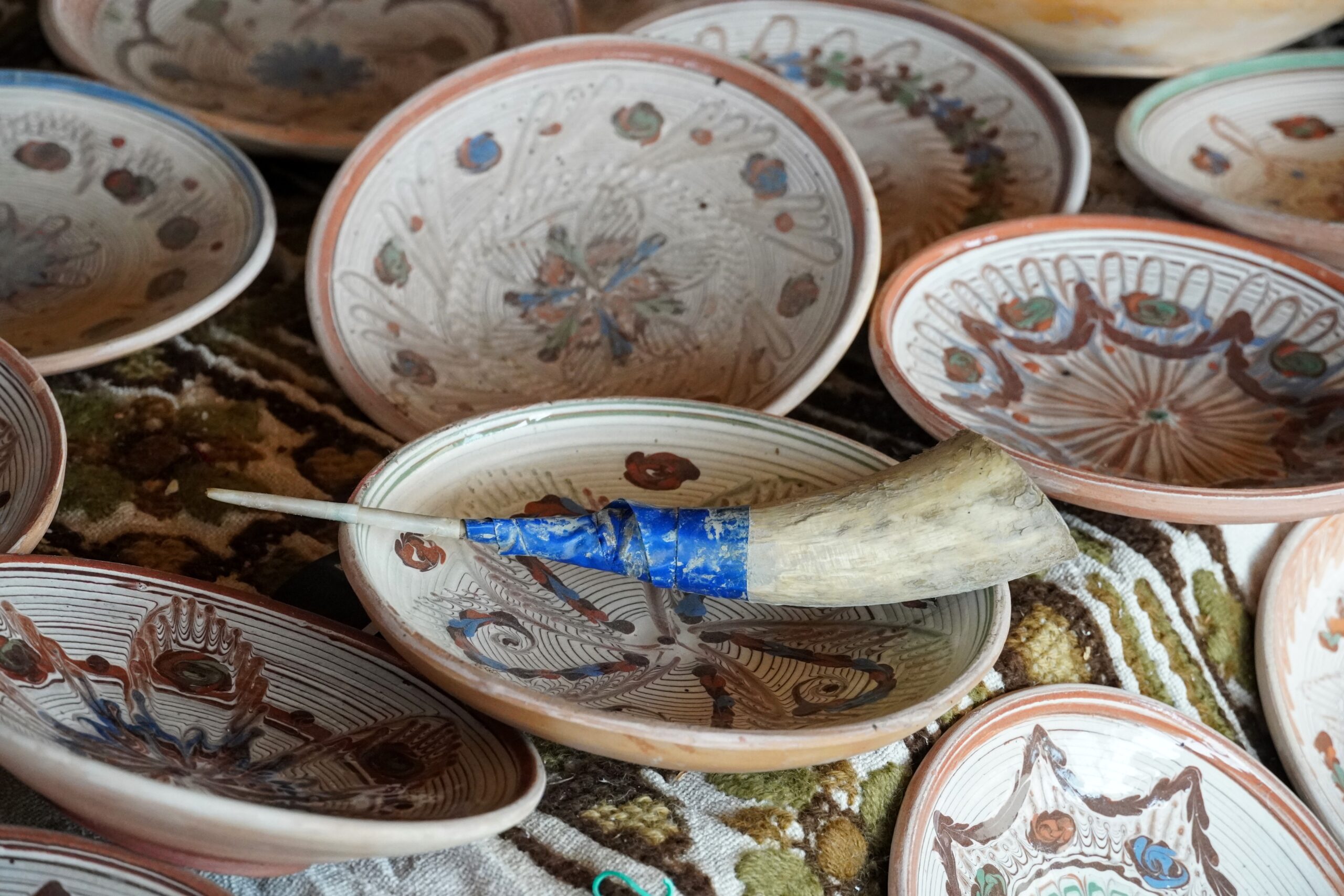
Horezu pottery is distinguished by its vibrant colors and traditional symbols, the most prominent being the "Horezu rooster," a herald of the day's arrival, symbolizing the victory of light over darkness. Other secondary symbols include the fish, representing Christianity, and the snake, symbolizing wisdom, as well as traditional motifs such as the wheat ear for prosperity and the clover for luck. The decoration is done using special tools like a cow's horn with a goose feather for applying the paint, while in the past, rabbit whiskers or horsehair were also used.
A project financed with the support of the General Secretariat of the Government through SDC.


 English
  Romanian